
War in the Llano River Valley
The Mason County War was an exercise in why some men are best left alone...

By Ben Christensen, Old Republic Journal
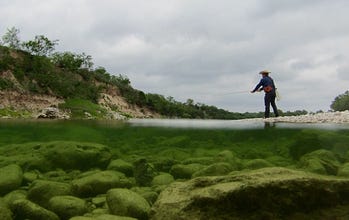
Editor’s Note: At The Old Republic Journal, we feel it necessary to have a strong understanding of place. The Hill Country rivers we fish today run through valleys with surprisingly lurid and bloody histories. Before Mason County was known for rock hounds, rock stacking, and cattle ranching, it was the campaign ground for one of the most violent ethnic wars during Post-Civil War era Texas: the Mason County War, or Hoodoo War.
According to an old rural aphorism, some men “just need killin’.”
It may be more helpful to point out that some men are best left the hell alone. One man’s killing, on a beautiful Mason County afternoon in early May of 1875, triggered a paroxysm of violence in the Llano Uplift worthy of a Quentin Tarantino movie.
That man was a small-time Mason County cowboy named Tim Williamson, foster father of respected Texas Ranger and Comanche fighter Scott Cooley. Williamson and his wife took Cooley in when he was a small boy sick with typhoid, shortly after he had been ransomed back from Comanches. Cooley had been orphaned in the raid where he was captured. Williamson, then a young married man with no children, nursed Cooley to health and raised him to adulthood as a son. The Williamsons never had any children.
During the American Civil War that raged between 1861 and 1865, most German settlers of the central Texas Hill Country were known Unionists who had remained loyal to the Union and were largely despised during the postwar era by their beaten Texas Confederate neighbors.
Because of the Great Texas Cattle Drives to railheads in the Midwest, cattle blew up as a big-money asset in Texas by the 1870s. A good way to frame the dynamic in Mason County was that there was suddenly a “beef rush” on. This brought Anglo settlers into contact with the Germans via the Great Western Cattle Trail, which by the late 1870s had surpassed the Chisholm Trail to the east in volume.
Cattle theft became rampant across the state. Money-hungry, broke, desperate young men with excellent cowboy skills and a horse could swipe a herd of cattle and take them north along the trail with an efficiency a meth addict cutting a catalytic converter out from underneath a Toyota Tundra could only dream of. However, out-and-out cattle theft, due to the practice of branding a stamp of ownership into the cowhide, was not widespread.
A practice common amongst both German and Anglo settlers in the Hill Country river valleys across the Edwards Plateau—so-called “mavericking,” or claiming and branding unbranded calves in the finders-keepers playground of pre-fenced open range ranching—provided the friction that lit the Hoodoo War aflame.
Imagine the Llano Uplift from Fredericksburg north on Highway 16 to Llano, and then out west to Mason, north to San Saba, and east to Marble Falls, before it was when the ranches were fenced. This open country was frequently shared as cattle range—but not always. In fact, some of the earliest adopters of barbed-wire fencing were German settlers around Fredericksburg and Mason. It was the Anglo cattle drivers who scoffed at the concept and routinely cut fencing that appeared along their routes.
In western Mason County, especially, where you can follow the Llano River into the deep valleys and bluff country, fences weren’t a thing—likely owing to the granite—and cattle ranged in the river and stream valleys all year. While a bred cow might have somebody’s brand, the calf it dropped in March or April was thought of by maverickers as up for grabs. Even to the uninitiated, you can see where the practice of riding up and opportunistically branding a longhorn bull calf nursing off a calf with someone else’s brand was unethical and constituted out-and-out theft. But it was widely practiced, and it proved a scourge for anyone not keeping close enough eye on their ranging herds.
German and Anglo ranchers alike picked off the calves in those open-range days as they grazed with unattended herds in the valleys west of Mason. As I mentioned, helped along by this competition for maverick calves, ethnic and political tensions over the societal wounds of the Civil War ruptured a vein of murderous hatred during the difficult “Reconstruction” period and even after.
Part of the regional cultural milieu in the Llano River Valley were some fairly big-time German ranchers—stern Methodists and ardent Freemasons—who began to feel losses to rustling. Some historians think losses to ranchers during the period due to theft were fairly minimal. But during the late beef rush of the 1870s, that’s not the way the German ranchers in the Llano Valley saw it. They were so mad they could have killed somebody.
In 1875, Mason County Sheriff John Clark, a former Union soldier who collaborated with Republican Reconstruction policies, had wandered in from Missouri after the Civil War. Likely related to the Hoersters of Mason County on his mother’s side, Clark found many friends and followers and a sense of belonging in Mason, and had been elected sheriff.
On February 17, 1875, Sheriff Clark arrested nine Anglo-Texan cowboys for driving a herd of branded cattle, charging them with cattle rustling. Four of them promptly escaped from the Mason County jail. Next day, however, Peter and Elijah “Lige” Baccus, Abe Wiggins, and Tom Turley—who hadn’t gotten away—were taken from the Mason County Jail by a Texas-Deutsche (German-American) lynch mob and hanged by their necks from a Live Oak at the southern edge of town, where US Highway 87 runs into Mason now.
Texas Ranger Lieutenant Dan Roberts managed to cut down Turley, who was still alive, but the other men were dead. One man, Charley Johnson, managed to escape the mob’s grasp on the way to the oak tree and got away, walking into Roberts’s camp days later with sore feet and harboring a severe animus. Thus began the Mason County War.
After this lynching, a shaky peace prevailed when presumptive target and respected Mason County pioneer Tom Gamel took his men to meet Sheriff Clark and a group of more than sixty German-Americans for a truce. The Germans reportedly promised no more lynching.
Only a couple of weeks after the lynching, in March 1875, Clark arrested a small-time Anglo cowboy named Tim Williamson at his home in Loyal Valley, between Fredericksburg and Mason, charging him with cattle rustling. Clark had previously had a verbal altercation with Williamson’s wife over a tax matter. Williamson made bond, but a few days later, Mason County Inspector of Cattle Brands and Hides Daniel Hoerster had his bond revoked. “Big Dan” was himself a known mavericker, so his motivations were suspect when he revoked Williamson’s bond after Williamson was alleged to have sold a maverick yearling calf to Carl Lemburg. Lemburg, like many other ranchers, bought unbranded maverick calves for five dollars a head.
Hoerster accompanied Sheriff Clark and Mason County Sheriff’s Deputy John Worley[i] to arrest Williamson at his home in Loyal Valley. They had gotten only a short way along the road back to Mason when about a dozen men led by Peter “Bad Man” Bader met the Sheriff’s posse.
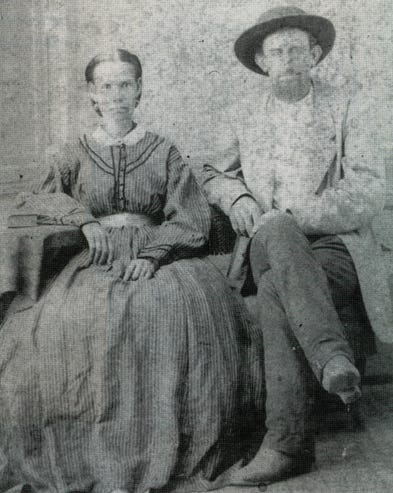
In a dastardly crime worthy of his nickname, Bader shot the unarmed Williamson dead after Deputy Worley (allegedly) shot Williamson’s horse from under him.
And that’s how former Ranger Scott Cooley became embroiled in the Mason County War. Cooley’s ensuing vengeance was most of what we remember about the Mason County War. Word reached Cooley that Williamson had been killed while he was bivouacked near Menard with Company D of the Texas Rangers. Eyewitnesses said that when he heard the news, he fell to the ground and wept in the dust. After regaining his composure, he swore a solemn vow of revenge, riding away from his service with the Rangers for good that morning.
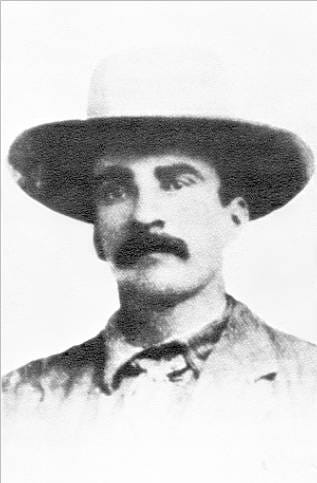
In a time before grand jury proceedings were sealed, Cooley went to Mason to observe the legal goings on over Williamson’s murder. He would exact his vengeance with clear-eyed professionalism after gaining ample workable intelligence by watching the proceedings. At the Mason County Courthouse, Cooley hid his grief as he sat in on first-hand testimony by Bader and Worley themselves about why Williamson and the others had to be killed.
In one of numerous examples of why the idea that “the law is blind” is a phony one, the Mason County grand jury declined to indict anyone—not even Bader. Cooley left Mason for a month; he told friends he needed to have a gunsmith “fix” one of his pistols.
When he got back to town, Cooley tracked down Deputy Worley working on a well at Doc Harcourt’s homestead south of Mason. He reportedly asked Worley for a drink from the well, and when Worley bent down to dip the bucket in, he killed the deputy with a gunshot to the head, cursed him, emptied the other five cylinders into his body, stabbed him a couple of times with a Bowie knife, and took his scalp.
Quick to attract accomplices, Cooley soon found an able sidekick in none other than John Peters Ringo, known to history as the notorious gunfighter, Johnny Ringo. The inner circle of the rest of Cooley’s gang consisted of brawling Irish brothers John and Moses “Mose” Beard, and George Gladden, of Burnet County.
On August 19, 1875, Cooley killed Bad Man Bader’s brother, Carl, and scalped him, in a case of mistaken identity. On September 2, Joseph Miller was killed, and a suspect was never named. The killing seemed random, and no connection to Cooley is known. Even without a known motive, historians are probably correct to suspect Cooley and his gang.
When Cooley’s men, Moses Beard and George Gladden, were subsequently led by a man named James Cheney into an ambush by Sheriff Clark and about 60 Germans, Beard was slain and Gladden escaped with nine gunshot wounds, including to the arm and face. Bad Man Bader cut a finger off Beard’s hand to get to a gold ring.
This ambush turned out badly for the German vigilance committee—and even badder for Bad Man Bader. The Beard brothers were well-connected in Burnet and Llano Counties, and Cooley’s gang grew rapidly as Anglo men began flooding to Cooley’s side.
Sometime after Beard was killed, Peter Bader was shot down and lost his scalp. Historians don’t know for certain who the gunman was. George Gladden was arrested and charged with Peter Bader’s murder, but it was almost certainly Cooley. Before he was slain, Bader, rightly in fear for his life, had moved his family into Fredericksburg, planning to sell his belongings and move to Florida. He never got the chance.
On September 25, 1875, Cooley, Johnny Ringo, and about six other gunfighters rode blithely into Mason, stopping at Cheney’s home in town. Unaware of their motivation, Cheney chatted with the men when they stopped at his house. He invited them in for coffee, and they accepted. As Cheney washed his face in the washbasin on his front porch, Johnny Ringo shot him down. It was Ringo’s first documented killing in his career as a famous gunfighter.
Just four days later, Big Dan Hoerster, who had parted ways with Clark’s “posse,” was blasted off his horse by John Beard, who shot Hoerster in the throat with buckshot in broad daylight as Hoerster rode in front of the barber shop in the Mason Courthouse Square. Cooley knelt in the street beside Hoerster’s corpse and cut away his scalp.
A gunfight ensued in the town, with Cooley and Ringo and the gang exchanging fire with some Germans who had seen Hoerster killed. The band escaped, but one of Cooley’s men, William Coke, was apprehended days later by Clark and his men. Clark sent Coke back to Mason with some posse members and he was never seen again, with Clark claiming Coke had “escaped.”
After Hoerster’s killing, Sheriff Clark lost his nerve. Cooley had come to Mason bent on killing the sheriff, and Clark knew it. Sheriff Clark found himself the subject of a grand jury investigation by Texas Ranger Major John B. Jones and the district court in Mason County. However, due to local intimidation and personal sympathies of the grand jury members, Clark was “no-billed” for several extrajudicial killings and false imprisonment. The charges were dismissed, and Clark fled back to Missouri, where he spent the rest of his days as a low-profile farmer.
Cooley and Ringo were arrested in Burnet by Sheriff A.J. Strickland on December 27, 1875. As they were shuffled between Burnet, Travis, and Lampasas County jails to keep them from being sprung by their gang, things looked grim for the pair—until a large band of their Anglo-Texan supporters broke them out of the Lampasas County jail. Cooley and Ringo parted ways after the breakout, with Cooley heading south to Blanco County to lay low and Ringo on the lam in the Hill Country until his recapture in November 1876 in Llano County. Ringo remained in jail for the murder of James Cheney before his charges were ultimately dismissed in 1878 and he headed for Arizona.
In late October, 1881, Ringo was allegedly a leader of a gang of outlaws feuding with Deputy U.S. Marshal Wyatt Earp, and Earp’s brothers and associates in Cochise County, Arizona. While he wasn’t actually present for the infamous “shootout at the OK Corral,” Ringo was affiliated with the Cochise County Cowboys while there.
Cooley died after suffering violent convulsions on the summer evening of June 10, 1876, as he drove his wagon east from Fredericksburg towards Johnson City. He had just had dinner at the Nimitz Hotel—which is now the National Museum of the Pacific War. A known epileptic, Cooley had either suffered a massive seizure that killed him, or he had been poisoned. The cause of death was listed as “brain fever.”
Just 24 years old, Scott Cooley was buried in the Miller Creek Cemetery, on the north side of US-290, three miles east of the US-290/US-281 intersection south of Johnson City, only a few miles from my homestead.
His gravestone is inscribed:
Scott Cooley
1852 1876
Texas Ranger
Thank y’all for reading. And now you’ll know when you’re out there fishing around the James River. We’ll see y’all out there. -Ben
[i] For standardization, I adopted the spelling used by Margaret Bierschwale in her book, The History of Llano County, except in the spelling of Johnny Ringo’s name. Bierschwale uses the accepted spelling attributing Ringo’s surname as “Ringgold.”