


Howdy from my rocky outcrop near Johnson City, Texas.
To commemorate America’s 250th birthday yesterday morning, I fished the Pedernales. Caught four Guadalupe bass (tooth-patch on the tongue), and at least twice as many panfish, and it was as exhilarating as ever. Get on it!
I am a fly angler, like my maternal grandfather and great-uncles and great-grandfather were. The Levings men were Yankees, Minnesota and Wisconsin born and raised. North woods, Cloquet and Superior—muskeg country. Not the broad sunlit uplands of the southern reaches of those states.
That’s wild rice and Boundary Waters country. Birchbark canoe and Menominee and French ancestors’ country. But the Levings name was first spelled the -ings way by a clerk writing down my 9th great-grandfather, Noah Levens’s name on a New Hampshire militia roster in 1779.
Noah enlisted in Walpole, New Hampshire, and was an ardent Patriot. He was the great-great-grandson of a Puritan named Charles Levins, who settled Roxbury, Massachusetts in 1631, and still lies buried there with a tombstone above his grave.
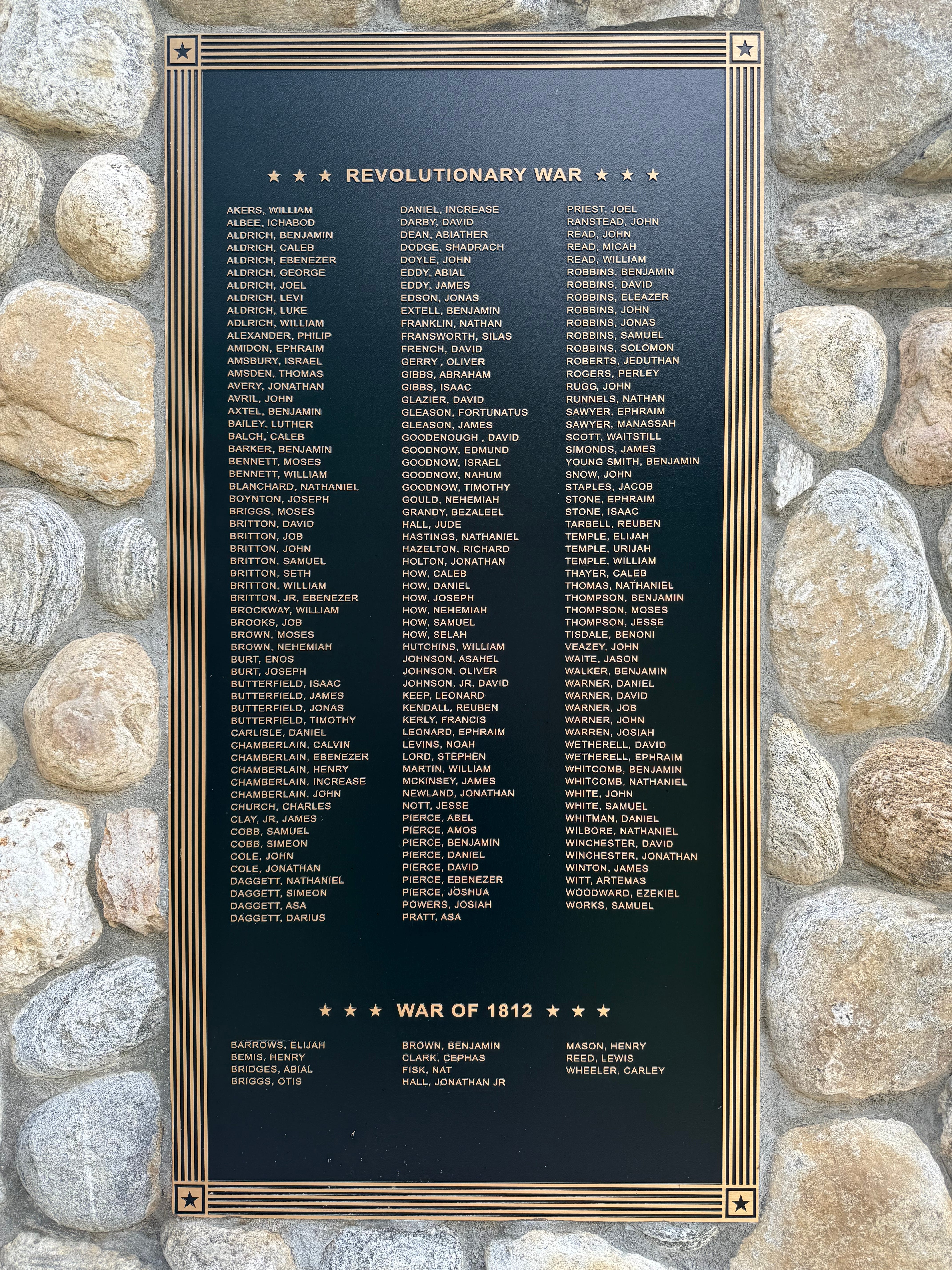
A memorial plaque in the town square of Walpole, New Hampshire, I visited last summer.
This very day, we celebrate 250 years of our American Republic. Having been born in 1976, I just celebrated my own 50th. I know the history deeply and well; I have plumbed the depths of the Federalist Papers and Washington’s brilliant military strategy, with Franklin and Adams and Jefferson in Paris getting the French on board with the cause. It was a dastardly and wild plan that should never have succeeded.
But it did. And we should all be glad it did.
I celebrate this country that has nurtured my existence. I used to be conflicted about having served overseas in a rather imperialistic role, reminiscent of the British themselves, and as an infantryman to boot!
But when I read Thucydides’ wonderful account of the Peloponnesian Wars (or a translation of it), I realized the inevitability of some nation or other fulfilling the role of a hegemon. Someone always plays the leader of a regional empire, and, if not Athens, Rome, Spain, Britain, or the United States, then a despotic Persia, Carthage, Napoleonic France, or Prussia would have been happy to do so. China would be happy to do so now.
But I digress. I would be remiss not to urge everyone to the most ardent patriotism, whether discerned after reading a lot of history, or merely jingoistic. Regardless of the cause for your patriotism, I hope the result is efficacious: civic duty in the forms of military service, regular voting, and speaking up at local government meetings about things we care about. Writing our representatives in congress about thoughtless expansion of data centers and energy infrastructure without addressing the underlying consumption problem.
We’ll see ya out there. -Ben