
The Only Fly You Need in the Texas Hill Country
How to tie and fish the IGFA world-record proven Chips ‘n Salsa fly

By Ben Christensen, Old Republic Journal
It was a sunny morning, October 11, 2021. My father’s 91st birthday. I had said goodbye to him through a window earlier that year on April 17 as he lay dying in one of those crummy “memory care” facilities. It was Covid, and I couldn’t hold his hand, give him a hug, or anything a son might be allowed to do if Covid restrictions hadn’t been in place. His death was a painful loss rather than the proper goodbye I wish I could have given him.
The day after he died, on April 18, 2021, I went fishing in a back bay on the lower Laguna Madre and caught my first snook on the fly in a narrow mangrove channel, where the snook was feeding aggressively. Immediately after releasing the snook, I caught a bruiser redfish with the same fly. I am a believer, so I was grateful that fishing had given me something to hold onto when I couldn’t hold my father’s hand.
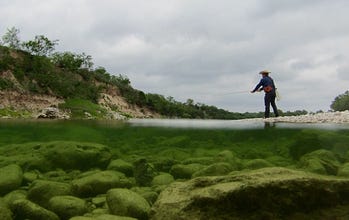
Then, I was fishing the Pedernales on dad’s birthday that year. My son Daniel and I were in my Flycraft raft, out to catch Guadalupe bass and largemouth and Rio Grande cichlids like we enjoy doing. We were using Daniel’s fly, which is the Hill Country fly I use almost exclusively.
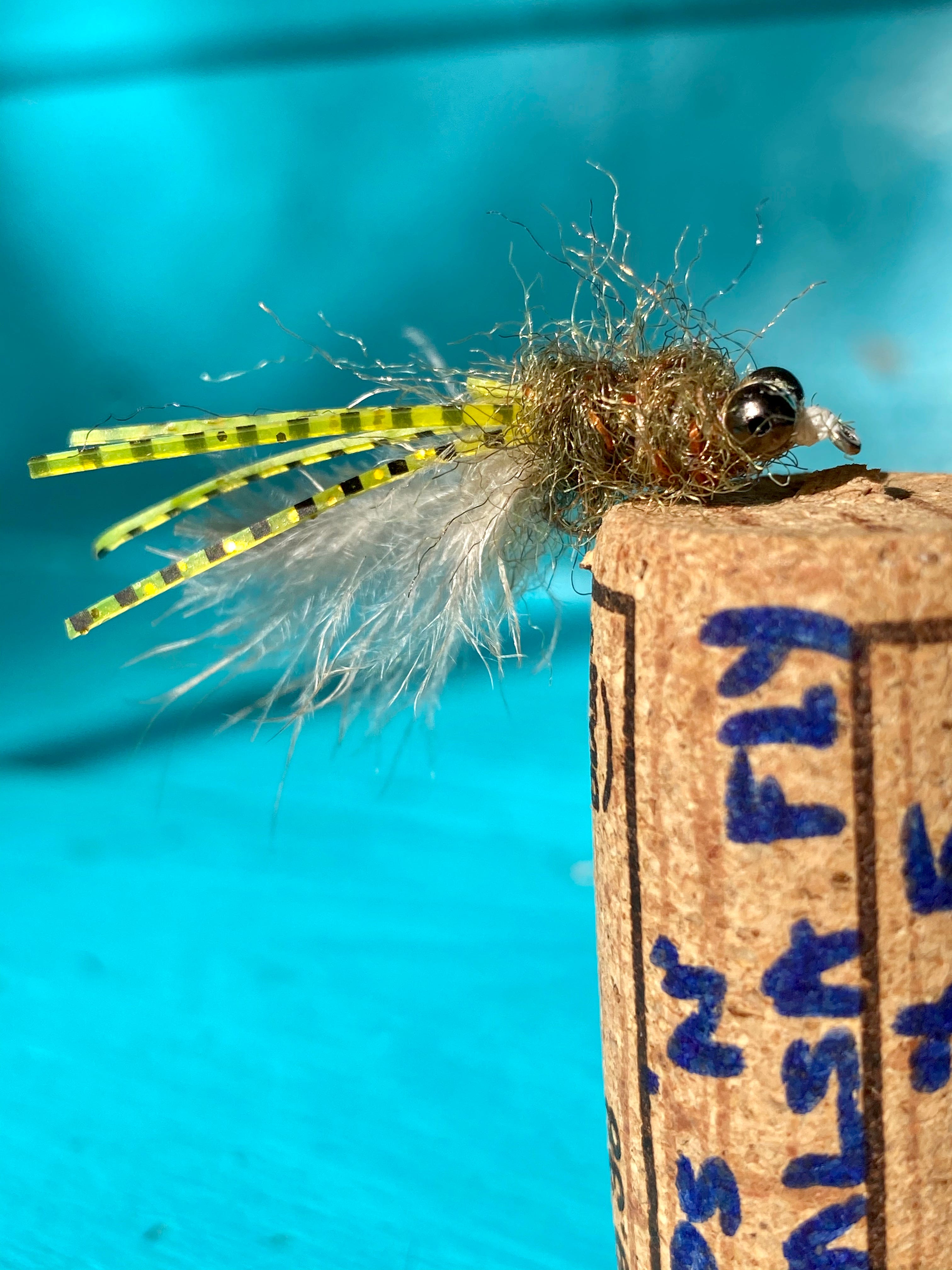
He called it the Chips ‘n Salsa because every fish from the Pedernales to the San Saba and the Nueces wants to snack on it. The genius of this fly is its ability to mimic three primary warm-water food sources for the Hill Country fish we all love to catch: damselfly nymphs and small crawfish, with some “frogginess” thrown in on a variation with rubber legs for good measure.
We had hardly started our run, with me at the oars, when we both spotted a huge blue catfish on the surface, just below some overhung pecan branches near the bank, river left.
“Is that a catfish?” my son asked me at the same time I was saying, “Dude, that’s a big catfish!”
He tried a few casts with a Chips ‘n Salsa fly on his Scott Flex 4 WT as it lay suspended on the surface, to no avail.
“Nah, I don’t know what I’m thinking. I have no business trying to catch that thing,” he said.
“Take the oars and give me the rod,” I said.
I watched the cat and noticed it had one gray eye on the side Daniel had been casting. It was blind on that side of its head. I flicked the fly to its good eye and it opened its mythical mouth and inhaled the fly. I set the hook and told Daniel I was on.
“Get me to the middle of the river!” I urged.
I fought the fish for 45 minutes on that tiny American-built 4 WT while Daniel cheered me on and simultaneously admonished me not to break his rod. I fought it like I fought bull redfish I caught on Rat-L-Traps at the end of the north jetty of the Brazos-Santiago Pass at South Padre Island with light spinning rods when I was a conventional angler in my youth. Namely, I kept the fish’s head up and horsed it away from any obstructions. We were both out of the raft on the sandy bank river right when he landed the fish, hanging more than halfway out of the net.
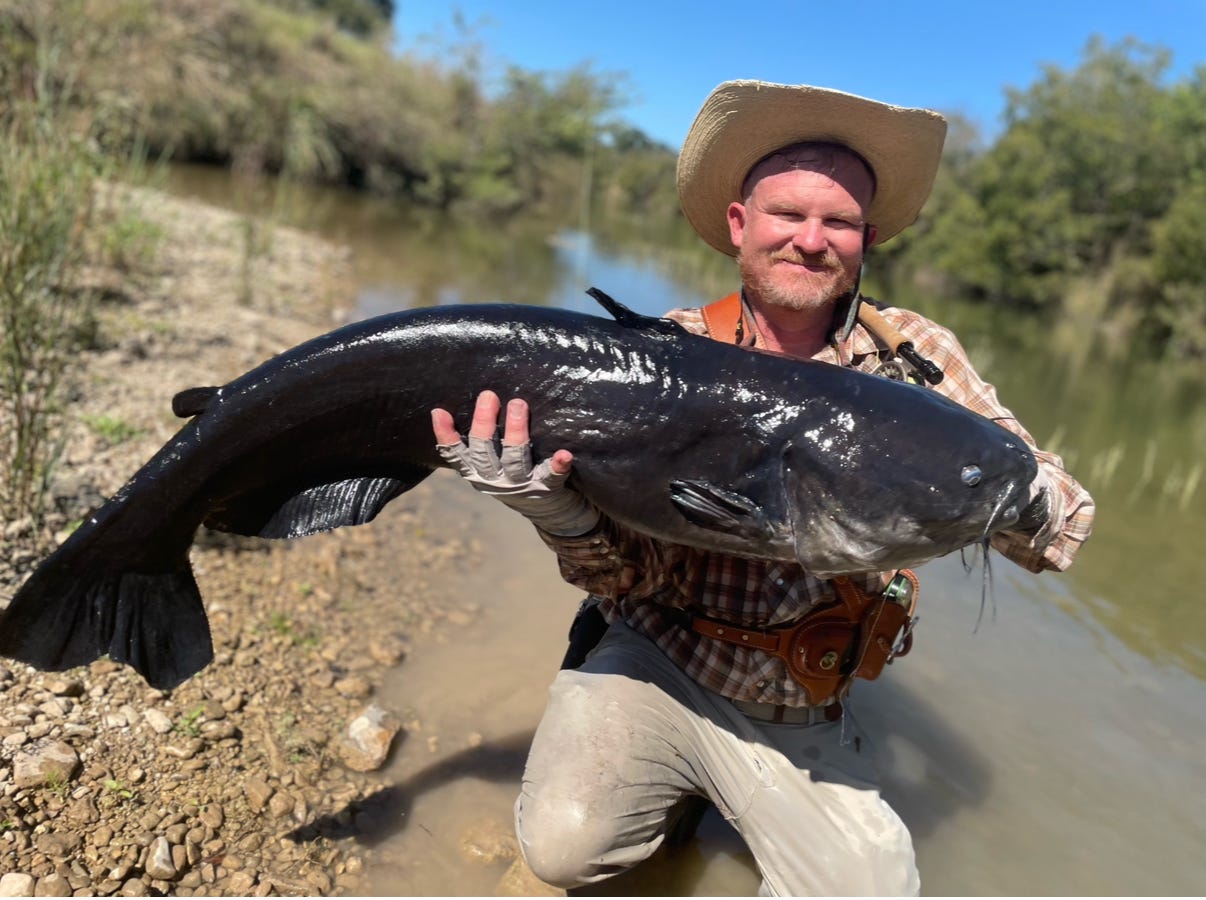
That’s the only fish I ever killed on the Pedernales, because Daniel said there was no way it was going to survive that fight and I agreed. We took it straight from Fredericksburg to TPWD inland fisheries in San Marcos to have it weighed because I thought it might be a state fly record. It wasn’t.
It weighed 31 pounds, 8 ounces and was 44 inches long. I had caught it on a tapered Rio Bass leader with 12-lb tippet—and the Chips ‘n Salsa of course.
I put the fish and stats on my Instagram over @pearlsnapflyfishing and it was immediately picked up by a sports guy at USA Today, who contacted me and did the write-up. He asked me what tippet I had used and I told him 12-lb. He said it appeared likely I had a 12-lb tippet class fly fishing world record with the International Game Fish Association. I looked into having that verified with them, and a couple days later I clipped the leader off next to where I had snelled it onto the fly line and sent it by mail to IGFA in Florida, where they confirmed the record.
For what it’s worth, we filleted the catfish and wound up with pounds and pounds of thin fillets that ate quite well indeed.
##The Recipe
The Chips ‘n Salsa fly can be tied in everything from a size 10 to a #1, and we like Gamakatsu stinger hooks. The materials are common and easily found at a shop like Sportsman’s Finest in Bee Cave or Living Waters in Round Rock. Daniel and I still tie the Chips ‘n Salsa together, the way my father and I bonded over grueling manual ranch labor clearing mesquite off fencelines or fire-branding calves in the summertime. Here is how you can put some of your own in your fly box:
Keep reading with a 7-day free trial
Subscribe to The Old Republic Journal to keep reading this post and get 7 days of free access to the full post archives.